19 Feb 2026
|16 min
Market validation
Learn what market validation is, why it matters, and how to conduct it step-by-step to reduce risk and increase your chances of success in product development.

Market validation is one of those make-or-break moments in product development that separates successful launches from expensive failures. Yet it's surprising how many teams skip this crucial step, relying instead on assumptions, gut feelings, or internal enthusiasm to guide their decisions.
A case study I reviewed during my Master's degree illustrates this perfectly. A construction manufacturer launched an expensive, "luxury quality" product targeting contractors whose main priority was value for money. The company had done minimal market validation, and the disconnect was painfully clear.
The consensus advice? Go back to basics and talk to your target audience.
This guide walks you through market validation: what it is, why it matters, and how to conduct it step by step to reduce risk and build products people actually want.
Key takeaways
Market validation tests your product concept with real potential customers before investing significant resources. It answers the question: "Will they buy this product?"
Unlike market research (which explores who your customers are), market validation confirms whether your specific idea has demand.
More than 50% of product launches fail to hit business targets. Validation helps you avoid building something nobody wants.
Use moderated tests (interviews, focus groups) to explore the "why" behind user behavior, and unmoderated tests (Surveys, Preference tests, Prototype testing) for scalable quantitative data.
Follow four steps: define your target audience and assumptions, build your tests, recruit participants, and analyze results to validate or pivot.
Lyssna's research panel and testing tools help you get validation results in hours, not weeks, so you can iterate faster and build with confidence.
What does market validation mean?
Market validation is one of the crucial early-stage steps of the product development process. Its purpose is to help you evaluate the profitability of a new product or business idea by researching your potential customers to see if there's a product-market fit – basically a fancy way of asking, "Does our product idea fit customer needs?"
Definition and purpose
Market validation is the process of testing your product concept, features, or value proposition with real potential customers before investing significant resources into development. It's about gathering evidence that people actually want what you're planning to build – and that they'd be willing to pay for it.
The purpose of market validation extends beyond simple confirmation. It helps you:
Identify demand: Confirm there's a genuine need for your product in the market.
Understand user needs: Learn what features and benefits matter most to your target audience.
Refine your offering: Gather feedback that helps you improve your concept before launch.
Reduce risk: Make informed decisions backed by user insights rather than assumptions.
Build confidence: Gain the evidence you need to move forward with conviction.
Where it fits in the product development lifecycle
Market validation typically starts after you've completed an internal idea validation process.
By this point, you've usually done some market research (competitor analysis, Google Trends searches, SEO research) and created product concept designs or built a minimum viable product (MVP). The design validation process helps verify that your concepts meet requirements before moving forward.
Here's where market validation sits in the typical product development timeline:
Stage | Activities | Purpose |
|---|---|---|
Ideation | Brainstorming, internal discussions | Generate potential product ideas |
Market research | Competitor analysis, market sizing | Understand the landscape |
Market validation | User testing, surveys, interviews | Confirm product-market fit |
Development | Building, iterating | Create the product |
Launch | Go-to-market execution | Release to customers |

Pro tip: Market validation isn't a one-time checkbox. The four steps (defining your audience, building tests, recruiting participants, and analyzing results) also function as a loop for a continuous product discovery cycle. You'll return to validation throughout development as you refine features, adjust pricing, or explore new market segments.

Market validation vs market research
These two terms often get confused, but understanding the distinction helps you apply each process at the right time.
Key differences
Market research helps you figure out more about your target customers (their demographics, pain points, overall market size) with the goal of building user personas. It's exploratory work that helps you understand who you're building for and what problems they face.
Market validation assumes you already know your target market well. What you need to find out is whether your specific product idea is something they'd actually use and purchase or subscribe to.
Aspect | Market research | Market validation |
|---|---|---|
Focus | Exploratory and broad | Focused and specific |
Core question | "Who are our customers?" | "Will they buy this product?" |
Timing | Happens first | Happens after research |
Purpose | Builds understanding of your audience | Tests assumptions about your product |
Output | User personas, market insights | Evidence of demand, validated concepts |
When to use each process
Use market research when:
You're entering a new market or industry.
You need to understand customer demographics and behaviors.
You're exploring potential problem spaces.
You want to identify market opportunities.
Use market validation when:
You have a specific product concept to test.
You need to confirm demand before investing in development.
You want to test pricing, messaging, or feature priorities.
You're deciding between multiple product directions.
In practice, market research comes first, and market validation follows once you have a clearer direction. Both are essential to your product development journey.
Why market validation is important
Taking a product to market without validating it first is a huge risk. Here's why market validation deserves a prominent place in your development process.
Preventing product failure
The statistics on product failure are sobering. According to McKinsey, more than 50% of all product launches fail to hit business targets. One common reason? Building products that solve problems customers don't actually have, or solving them in ways customers don't value.

Practitioner insight:"We could create structured customer validation instead of just relying on assumptions. Lyssna made that possible."
– Blaze Jemc, Director of eCommerce at FORM
Market validation dramatically reduces this risk by helping you:
Risk | How validation helps |
|---|---|
Building something nobody wants | Confirms demand exists before you invest heavily |
Discovering deal-breakers too late | Surfaces issues early, when they're cheap to fix |
Costly post-launch pivots | Lets you make changes during the concept phase |
Wasted development resources | Focuses your team on features that matter to users |
Improving product ideas and strategy
Testing your MVP with potential customers yields valuable feedback that helps you consider options you might not have thought of. Testing customer hypotheses before feature development enables product managers to refine ideas without requiring additional development resources.
Market validation isn't just about confirming your idea is good. It's about making it better.
This process helps other product stakeholders too. Product managers, product owners, and senior team members all benefit from having concrete user feedback to inform their decisions. Instead of debating opinions in meeting rooms, you can point to actual user responses.
Market validation improves your strategy by:
Revealing which features users prioritize most.
Uncovering use cases you hadn't considered.
Highlighting messaging that resonates (or falls flat).
Identifying potential objections and concerns.
Supporting decision-making and funding
For product managers, market validation helps figure out if an idea is financially viable within budget constraints. You can make better resource allocation decisions when you have evidence about what users want.
For entrepreneurs, market validation is crucial for securing funding. It helps determine how much money you need and what to ask from investors or banks. Without validation, it's extremely difficult to get funding. After all, who would invest in a product they don't know will sell?
Investors and stakeholders want to see evidence, not just enthusiasm. Market validation provides:
Data for pitch decks: Concrete numbers about user interest and intent.
Risk mitigation evidence: Proof that you've tested assumptions.
Market sizing validation: Confirmation that your target market is real and reachable.
Competitive positioning insights: Understanding of how users perceive your offering versus alternatives.
Pro tip: Negative validation results are just as valuable as positive ones. Learning that your idea won't work saves you from building something nobody wants. Use that feedback to pivot toward what will actually succeed.

Market validation methods
The right validation method depends on what you're trying to learn and the resources you have available. Let's explore the practical tools and approaches.
Moderated vs unmoderated tests
Moderated tests involve direct interaction between a facilitator and participants. Participants are less likely to get distracted, and you can observe body language and ask follow-up questions.
The downside: they take longer and aren't scalable unless you have a massive budget. But they're worth the trade-off for gathering rich qualitative data.
Unmoderated tests can be sent to a virtually unlimited number of people. Participants complete tasks independently, which means faster turnaround and lower costs per response. This approach works well when you need quantitative data or want to test specific elements quickly.
Aspect | Moderated tests | Unmoderated tests |
|---|---|---|
Format | Direct facilitator interaction | Self-guided by participants |
Data type | Rich qualitative insights | Scalable quantitative data |
Cost | Higher cost per participant | Lower cost per participant |
Timeline | Longer turnaround | Faster turnaround |
Best for | Exploring "why" | Measuring “what” |
Pro tip: Core assumptions like "there's demand for this product" are better suited for moderated tests, where you can pick up on nuances and expand on participants' answers. Specific element assumptions like "our pricing is right for this market" are great candidates for unmoderated methods like preference tests or surveys.
Surveys, prototype tests, preference tests
Lyssna offers several unmoderated testing methods that are particularly useful for market validation:
Design surveys: Test if visual elements resonate with your target audience. You can also test landing pages to maximize your value proposition and see how users respond to different messaging approaches.
Prototype testing: Get your MVP in the hands of potential users to test usability and functionality. This helps you understand whether your product concept works the way users expect.
Preference testing: Understand which design best achieves your goals. This is useful for screen layout designs or finding the right messaging. For example, you might test two different value propositions to see which resonates more strongly.
Surveys: Narrow your product concept, drill into pricing preferences, and explore business models (such as subscription pricing versus one-time purchase).
Pro tip: Try this survey template to help you evaluate pricing models for your product.
Qualitative and quantitative approaches
Effective market validation typically combines both qualitative and quantitative methods.
Approach | Purpose | Methods |
|---|---|---|
Qualitative | Understand the "why" behind user behavior | User interviews, open-ended survey questions, observation during prototype testing, focus groups |
Quantitative | Measure and compare | Closed-ended survey questions, A/B testing, task completion rates in usability testing, preference test results |
The best market validation strategies use both approaches. Start with qualitative research to understand the landscape, then use quantitative methods to validate and measure what you've learned.

How to do market validation (step-by-step)
Let's walk through a practical process for conducting market validation. These four steps provide a framework you can adapt to your specific situation.
Step | Focus | Key activities |
|---|---|---|
1. Define target audience and assumptions | Who you're validating with and what you're testing | Identify target customers, document core assumptions |
2. Build your tests | Creating validation tests that match your assumptions | Choose test methods, design focused studies, plan analysis criteria |
3. Recruit participants and test | Finding the right people and running your tests | Use existing networks, research panels, or partner networks; monitor early responses |
4. Analyze results and iterate | Transforming data into decisions | Identify patterns, code qualitative themes, validate or pivot |
Step 1: Define target audience and assumptions
Before you can validate anything, you need to be clear about who you're validating with and what you're testing.
Defining your target audience
Consider these questions when defining your target customers:
Are you targeting early adopters or laggards with your product idea?
Would your product be helpful to those you're targeting now and in the future?
Do you plan to have any international expansion with the product?
Be specific about demographics, behaviors, and needs. The more precisely you define your audience, the more meaningful your validation results will be.
Documenting your assumptions
Every product idea rests on assumptions. Market validation is about testing those assumptions before they become expensive mistakes. Key assumptions to test include:
Demand exists for this product. Do people actually want this?
This product solves a real need. Does it address a genuine problem?
Our pricing is right for this market. Will people pay what we're asking?
Users can understand and use it. Is the product intuitive enough for your audience?
Customers will choose us over alternatives. What makes your offering compelling?
Write down your assumptions explicitly. This clarity helps you design tests that actually address your biggest uncertainties.
Step 2: Build your tests
With your audience and assumptions defined, it's time to create your validation tests.
Assumption type | Recommended test method |
|---|---|
Overall demand and interest | Moderated interviews, Surveys |
Feature priorities | Card sorting, Preference tests |
Pricing acceptance | Surveys with pricing questions |
Usability and comprehension | Prototype testing, usability tests |
Messaging effectiveness | Preference tests, A/B testing |
Matching test methods to assumption types
Different assumptions require different testing approaches. Here's how to think about it:
Tips for building effective tests
Keep it focused: Test one or two assumptions per study to get clear results.
Use realistic scenarios: Frame questions in context that mirrors real usage.
Avoid leading questions: Let participants form their own opinions.
Include screening questions: Make sure you're testing with your actual target audience.
Plan your analysis: Know what success looks like before you start.
Step 3: Recruit participants and test
Finding the right participants is crucial for meaningful validation results. Testing with the wrong audience gives you data that doesn't reflect your actual market.
Recruitment approaches
Your existing network: Customers, email subscribers, social media followers.
Partner networks: Industry contacts, complementary businesses.
Research panels: Services that provide access to specific demographics.
If you're stuck trying to find suitable participants, a research panel can help. Lyssna's research panel gives you access to hundreds of thousands of participants with precise targeting capabilities, so you can reach your exact target audience quickly.
Running your tests
Set clear timelines: Define when you need results and work backward.
Monitor early responses: Check for issues with your test design.
Gather enough responses: Aim for statistical significance in quantitative tests.
Document everything: Keep notes on participant feedback and observations.
Practitioner insight: "The speed and the size of [Lyssna’s] panel are impressive. To do research studies in under 24 hours is pretty remarkable."
– Pavel Semenov, Head of Research at Joom
Step 4: Analyze results and iterate
Analysis is where your validation work pays off. This is when you transform raw data into actionable insights.
Analyzing quantitative data
Look for patterns in response distributions.
Compare results across different audience segments.
Calculate statistical significance for key findings.
Identify outliers and investigate why they occurred.
Analyzing qualitative data
Code responses to identify common themes.
Look for unexpected insights that challenge your assumptions.
Pay attention to the language users use (it often reveals priorities).
Note emotional responses and strong reactions.
Making decisions
Based on your analysis, you'll typically reach one of these conclusions:
Result | What it means | Next step |
|---|---|---|
Validated | Your assumption holds true | Proceed with confidence |
Partially validated | Some aspects work, others need adjustment | Iterate and retest |
Invalidated | Your assumption was wrong | Pivot or abandon this direction |
Pro tip: Invalidating an assumption isn't failure. It's success. You've just saved yourself from building something nobody wants.
Market validation in action: Example
Let's look at how a real company approaches market validation in practice.
Case study summary
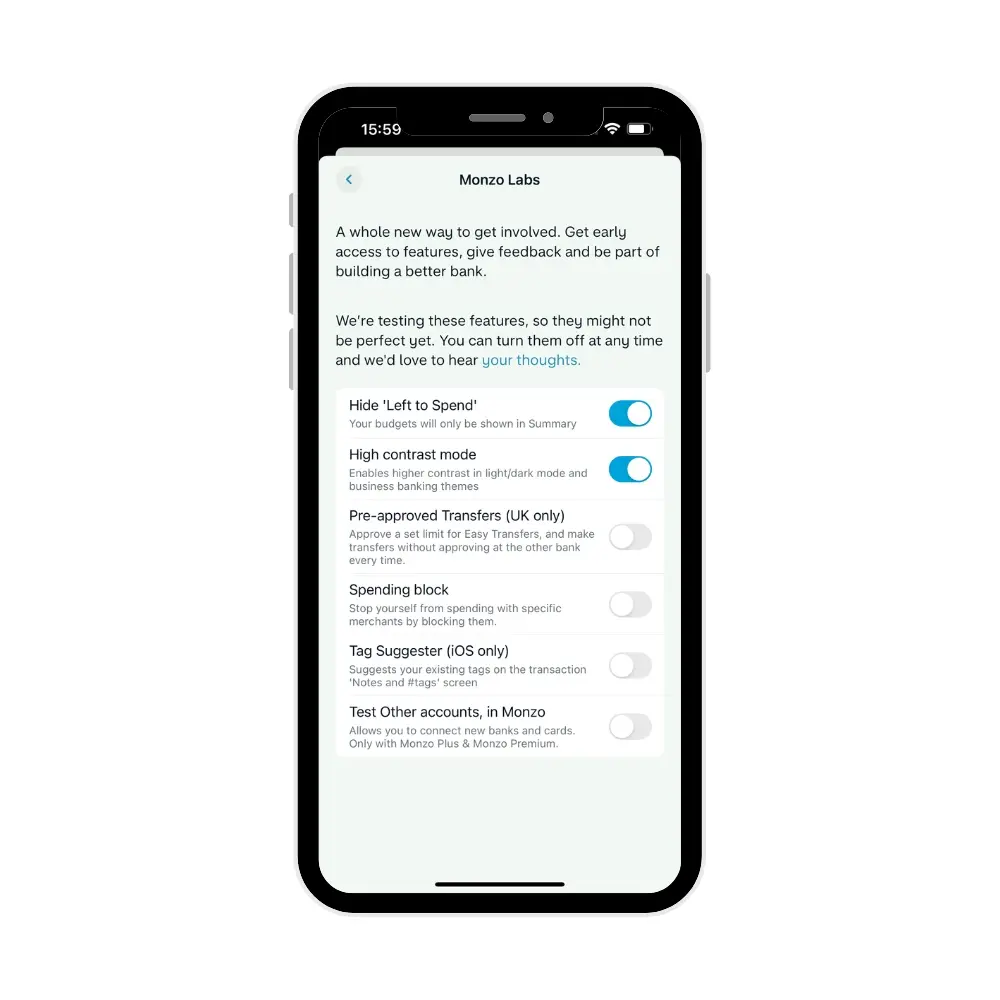
Monzo, a fintech bank provider in the UK and US, uses a dedicated section of their app called "Monzo Labs" to validate market demand for product and feature ideas. (Full disclosure: I'm an ex-Monzo employee, so I've seen this approach firsthand.)
How it works
In Monzo Labs, developers release beta prototypes of their product ideas. Any customer can activate the beta feature on the app.
Activity | How it works |
|---|---|
Beta prototype releases | Developers release beta versions of product ideas that any customer can activate in the app. |
Integrated feedback collection | Each beta feature includes a link to a feedback survey, and customers get in-app prompts to complete a feedback form if they've activated the beta. |
Waitlist validation | For major new products (such as an investment product), Monzo uses a waitlist system to verify market demand with existing customers. |
Several features and a whole app redesign have come and gone through Monzo Labs, helping the product development team validate their ideas with its existing customer base.
Naturally, it helps that a decent portion of existing Monzo customers would be considered "early adopters" and are used to trying out new products and features for their system to work the way it does.
Lessons learned
Build validation into your product. Monzo integrated validation directly into their app through Monzo Labs, reducing friction.
Use your existing customers. Monzo validates ideas with its existing customer base rather than recruiting external participants.
Combine quantitative and qualitative. Waitlist signups provide numbers; survey responses provide understanding.
Make feedback easy. In-app prompts and direct links to surveys remove barriers to participation.
Leverage early adopters. Monzo's system works partly because many of their customers are early adopters who enjoy trying new features.
Summary and next steps
Market validation is essential for reducing risk and building products that people actually want. Let's recap the key points and explore how you can get started.
Quick recap of key takeaways
What market validation is:
The process of testing your product concept with real potential customers.
Different from market research, which focuses on understanding your audience.
An ongoing loop, not a one-time activity.
Why it matters:
Prevents costly product failures by confirming demand early.
Improves your product through user feedback and insights.
Supports better decision-making and helps secure funding.
How to do it:
Define your target audience and document your assumptions.
Build tests that match your assumption types.
Recruit the right participants and run your tests.
Analyze results and iterate based on what you learn.
Key methods:
Moderated tests for deep qualitative insights.
Unmoderated tests for scalable quantitative data.
Surveys, prototype tests, and preference tests for specific validation needs.

How Lyssna can help you get started
Ready to start validating your product ideas with real users? Lyssna provides the tools you need to conduct effective market validation quickly and affordably.
For market validation, Lyssna offers:
Surveys: Gather quantitative and qualitative feedback on your product concepts, pricing, and messaging.
Prototype testing: Put your MVP in front of real users to test usability and gather feedback.
Preference testing: Compare different concepts, designs, or messages to see which resonates most.
Card sorting: Understand how users categorize and prioritize features.
Research panel: Access hundreds of thousands of participants with precise targeting to reach your exact audience.
The best part? You can get results in minutes, not weeks. This means you can validate assumptions quickly and iterate faster, keeping your product development on track.
Practitioner insight: "Lyssna is supporting us in reducing the MVP delivery timeline from 1 year to 3 months."
– Louis Patterson, Innovation Delivery Officer at British Red Cross
FAQs about market validation

Alexander Boswell
Technical writer
Alexander Boswell is a product-led content writer and researcher with a background in marketing strategy and consumer behaviour. When he’s not writing, he’s playing baseball and D&D.
You may also like these articles