
19 May 2026
|11 min
How to recruit participants for a study
Learn effective participant recruitment strategies for research. Discover methods, tips, and tools for reaching target audiences, overcoming challenges, and ensuring quality data.

The right participants can make or break your research. With the right match, you can uncover feedback that drives your project forward. But if you miss the mark, you risk collecting data that doesn't reflect real user needs.
So, how do you make sure you're targeting the right people? This guide walks you through the recruitment methods available, the selection process, and what you need to ensure your study has meaningful, reliable results.
Key takeaways
Before recruiting, define your research goals, target audience, and sample size – these decisions shape every step that follows.
Research panels, email lists, social media ads, online communities, and referral programs each suit different timelines, budgets, and study types.
Screener surveys are essential for finding participants who genuinely fit your study's needs – keep them short, clear, and relevant.
Incentives don't have to be monetary – understanding what motivates your specific audience is more important than the size of the reward.
Track participant quality, attendance rates, and time to recruit after each study to improve your process next time.
Lyssna's research panel gives you access to 690,000+ vetted participants across 124 countries, with tools to check audience availability and recruit for studies on any platform.
What should you consider before recruiting research participants?
Before recruiting participants, clearly define what your study aims to achieve. Here's what to consider:
Define your research goals: What do you hope to learn? Whether you're testing a product or conducting a survey, clarifying your objectives will guide your recruitment process.
Identify your target audience: Who are you trying to reach? Think about the demographics – like age, occupation, or behaviors – most relevant to your study.
Determine the sample size: How many participants will provide meaningful data? Larger studies may need a bigger sample, but smaller, more focused studies can often yield insights with fewer participants. The oft-cited Jakob Nielsen report recommendation suggests five users is often enough to surface the majority of usability issues.
Find your perfect research participants in minutes
Struggling to recruit the right study participants? Lyssna's pre-vetted panel connects you with 690,000+ targeted participants. Start your research faster, easier, and more effectively – with just a few clicks.
6 methods for recruiting research participants
Recruiting participants requires different approaches depending on your goals, budget, and timeline. Here's a breakdown of each method, including their respective pros and cons.
Research panels
Platforms like Lyssna, Prolific, and Respondent give you access to a wide range of pre-vetted participants that you can filter by demographics and interests.
Pros: Convenient and time-saving, especially for studies needing specific criteria.
Cons: Costs can be higher, especially if you're running multiple studies.
Example: A market research firm using Lyssna’s panel to recruit 200 participants who match their buyer personas.
Email lists
Using your existing customer or contact database is one of the easiest ways to self-recruit people already familiar with your brand or product.
Pros: Cost-effective, and your contacts may be more motivated to participate.
Cons: The diversity of your participants may be limited by the size and quality of your email list. If your goal is to gather feedback from a wide range of users, an email list of existing customers won't capture people who aren't already engaged with your brand.
Example: An ecommerce site sending a survey to customers to gather feedback on their shopping experience.
Social media ads
Advertising on platforms like Facebook, Instagram, or LinkedIn lets you target participants based on specific demographics, interests, and behaviors.
Pros: Highly customizable audience targeting, so you can reach very specific groups.
Cons: Ad costs can increase quickly, especially if response rates are low.
Example: A healthcare study using Facebook ads to find participants within a specific age group who are interested in fitness and wellness.
Website pop-ups and banners
Adding a pop-up or banner on your website attracts visitors who are already interested in what you do.
Pros: You’re reaching a relevant audience at the moment they’re engaged with your brand.
Cons: It’s limited to your website traffic, so you may miss potential participants outside your existing audience.
Example: An ecommerce brand displaying a banner to website visitors inviting them to participate in a product usability study.
Communities
Participating in or partnering with online forums, Slack groups, Reddit threads, or industry-specific communities gives you access to highly engaged individuals interested in your field.
Pros: You’re likely to find highly engaged and relevant participants.
Cons: Building trust and presence in these communities takes time and effort.
Example: A tech company posting in a Reddit thread dedicated to user experience to recruit testers for a new software interface.
Referral programs
Encouraging current participants to refer friends or colleagues in exchange for incentives can organically grow your participant pool, especially when targeting niche groups.
Pros: Cost-effective and can lead to high-quality, motivated participants.
Cons: Referrals may lack diversity, and your participant pool could remain narrow.
Example: Offering participants a discount or bonus for each successful referral who joins and completes your study.

How do you screen and select research participants?
The better your screening process, the more relevant and reliable your results will be. It's not just about getting people through the door — it's about finding those who genuinely fit your study's needs.
The importance of crafting screener questions
As we outline in the above video, screener surveys are a good way to make sure the participants you're recruiting match your study's needs. Whether you're filtering based on demographics, behaviors, or specific experiences, screeners let you zero in on the right people.
For user interviews specifically, video screeners add an extra layer of qualification – asking participants to record a short video response so you can assess their communication style and fit before committing to a session. This is particularly useful when the quality of the conversation matters as much as demographic fit.
If you’re using research panels, many of these screeners are already built into the platform, making this stage easier and faster.
Four screener question examples
Academic research:
Sample question: "Have you completed a degree in [specific field]?"
Purpose: This question helps confirm participants have the relevant background.
Healthcare research:
Sample question: "Have you experienced [specific medical condition] in the last year?"
Purpose: Helps filter participants with relevant health conditions for surveys.
Market research:
Sample question: "Have you purchased [product type] in the last 6 months?"
Purpose: Ensures participants are active consumers in your market.
Scientific research:
Sample question: "How often do you engage in [specific behavior or activity]?"
Purpose: This helps find participants whose habits align with your research focus.
Five tips for screener accuracy
Keep it short: . Focus on essential questions – long screeners may discourage participants.
Stay relevant: Unnecessary questions can confuse participants and reduce screening effectiveness.
Use clear language: Avoid technical terms or jargon that could affect response accuracy.
Get informed consent: Before starting the screener, provide participants with clear information on the process, how their data will be used, and that participation is voluntary.
Be diverse and representative: Be mindful of how your screener might unintentionally exclude certain groups, and adjust to make your study more inclusive.

What motivates research participants?
Participants are driven by a different factors depending on the type of research.
Monetary incentives often appeal, especially in market or healthcare research where you're asking for a significant time commitment. For others, non-monetary incentives – like contributing to social good or gaining knowledge – can be a strong motivator, particularly in academic and non-profit research.
Determining appropriate compensation depends on a range of factors: the study length, the topics covered, the expertise or effort required, and the competitive landscape.
How do you overcome common participant recruitment challenges?
Recruiting participants comes with its fair share of challenges. Here's how to tackle the most common ones:
Managing logistics. Use tools to streamline recruitment and scheduling. Lyssna's built-in interview rescheduling handles cancellations and time changes automatically – no manual follow-up needed. Panelist live chat lets you message participants directly before sessions to handle last-minute questions or confirm details, helping reduce no-shows before they happen.
Boosting response rates. Keep your communication simple. Clear messages, strong incentives, and timely reminders can improve participation.
Reaching niche groups. Engage online communities, use targeted ads, or offer referral incentives to connect with hard-to-reach populations.
Managing costs. Stick to budget-friendly methods like research panels without compromising on participant quality.
Avoiding selection bias. Include a diverse range of participants to prevent skewed results.

Measuring recruitment success
After recruiting your participants, it's worth evaluating how well your strategy worked by tracking a few key metrics:
Participant quality. Did the participants meet your criteria and provide valuable feedback?
Attendance rates. If you're conducting moderated research, use scheduling tools that track attendance. Low attendance may call for follow-up reminders or incentive adjustments.
Time to recruit. Record how long it takes to fill your participant pool, and compare it with previous studies to identify bottlenecks.
By tracking these metrics, you can fine-tune your recruitment process for next time.
How Lyssna can help
Lyssna makes participant recruitment easier at every stage – from finding the right people to collecting their feedback.
Our research panel gives you access to 690,000+ vetted participants across 124 countries, with 395+ demographic and psychographic attributes to target – whether you're running unmoderated studies or moderated interviews. Before you start building your study, you can use the Lyssna Panel page in the test builder to check whether your target audience exists in the panel and get a fulfilment estimate, so you know what's feasible before you invest time in your setup. Responses are typically provided within a few hours, and if you're not satisfied with any of your participants, we'll replace them at no extra cost.
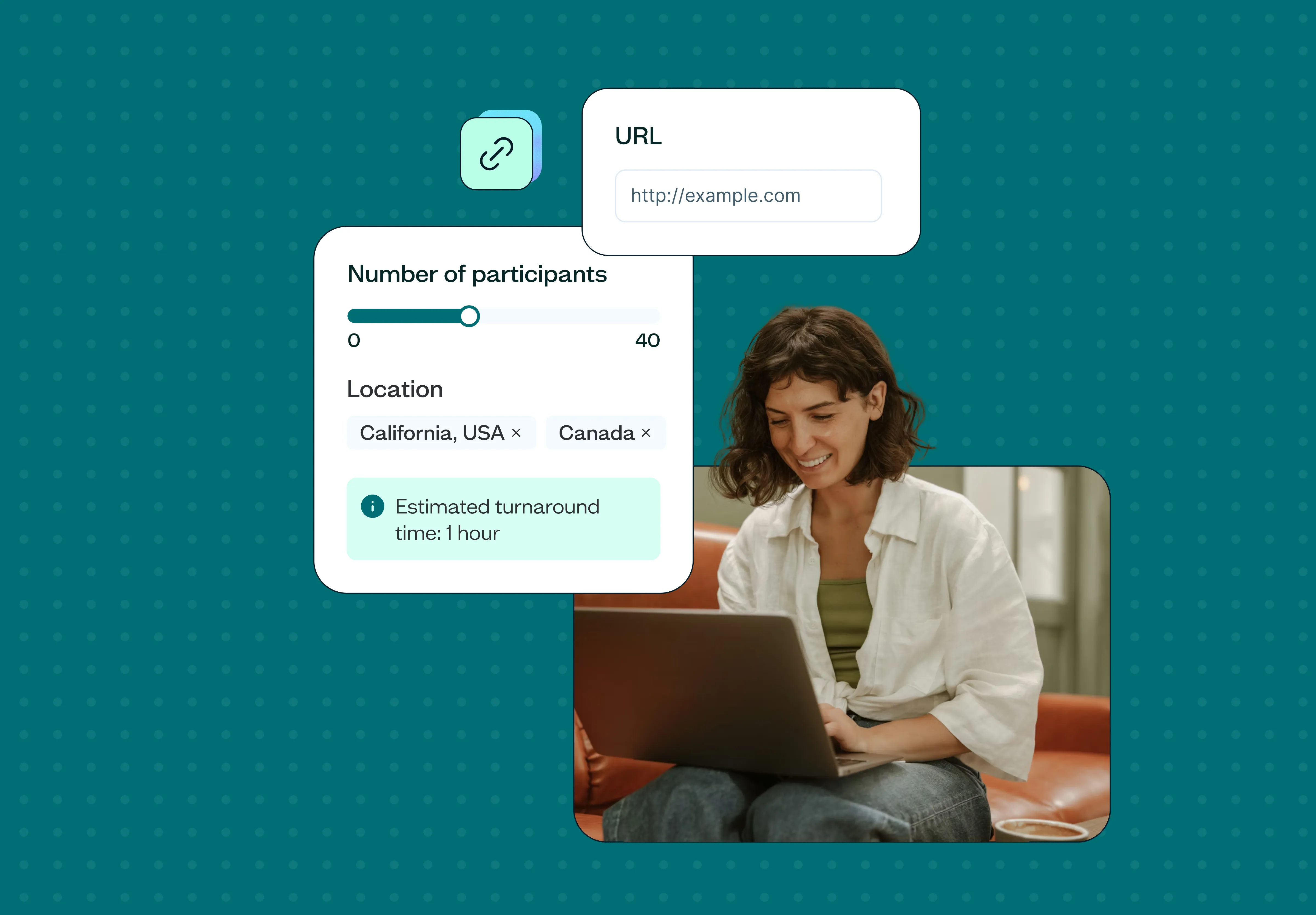
And if your research is hosted on another platform – Maze, Typeform, Qualtrics, Google Forms, or elsewhere – you can still recruit from the Lyssna panel using Third-party studies. Share your study link, set your demographic criteria, add a screener if needed, and responses typically start in under an hour.
Transform your research with quality participants
Don't let recruitment challenges slow you down. Lyssna's panel gives you instant access to diverse, high-quality participants tailored to your exact research needs. Get meaningful insights in 30 minutes or less.
FAQs about how to recruit participants for a study


Pete Martin
Content writer
Pete Martin is a content writer for a host of B2B SaaS companies, as well as being a contributing writer for Scalerrs, a SaaS SEO agency. Away from the keyboard, he’s an avid reader (history, psychology, biography, and fiction), and a long-suffering Newcastle United fan.
You may also like these articles



Try for free today
Join over 320,000+ marketers, designers, researchers, and product leaders who use Lyssna to make data-driven decisions.
No credit card required